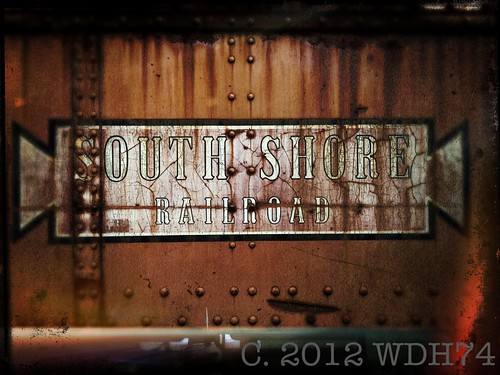
The Chicago, South Shore, and South Bend Railroad is one of the last interurban railroads in the United States. It still runs today, under the aegis of the Northern Indiana Commuter Transportation District. They still use electric trains, and there's even some street running through Michigan City. It's one of the icons of Chicago area railroading.
This is a 1920's era South Shore car, currently on display at the Fox River Trolley Museum in Elgin, Illinois.
Showing posts with label history. Show all posts
Showing posts with label history. Show all posts
Thursday, November 15, 2012
South Shore


Wednesday, October 10, 2012
Trolley
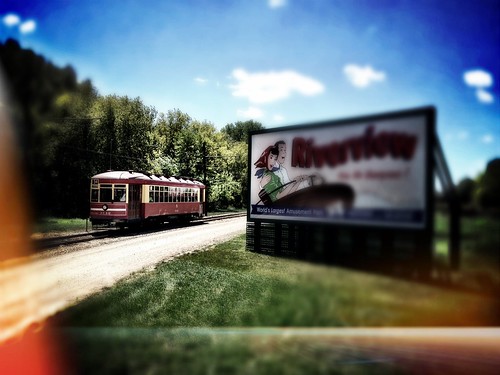
This is the former Chicago Surface Lines #3142, one of 169 steel "pay as you enter" streetcars ordered in the early 20's. Built in 1923 by the J.G. Brill Company, 3142 was used by CSL, and later the CTA, until 1953, when it was parked and used as storage at the CTA's South Shops. Donated to the Illinois Railway Museum in 1973, a fifteen year restoration finally put it back on the tracks. Today it is the only surviving CSL steel "arch roof" streetcar.
I saw this operating at the museum, and got it rolling past the Museum's Riverview billboard. I like to think that 3142 delivered patrons to the park at one time.
I saw this operating at the museum, and got it rolling past the Museum's Riverview billboard. I like to think that 3142 delivered patrons to the park at one time.
Wednesday, September 19, 2012
Kicks, etc.
Originally a two-lane road, Route 66 needed some upgrades by the mid fifties, as America's newfound mobility meant more and more people were traveling by car for that family vacation. This was done by simply paving two more lanes parallel to the existing road, separated by a grassy median-hey presto, two new lanes!
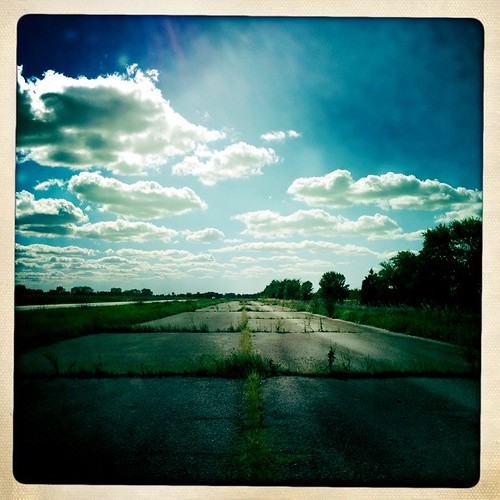
As we all know, eventually Route 66 was superseded by the new interstate system, the paved superslab being better suited to higher traffic levels and higher speeds as well. In most places, old Route 66 reverted to two lanes, usually the newer two, and the old pavement was left to sit, or removed altogether.
In a lot of places you can still see these original stretches of road, parallel to the current alignment, cracked and crumbling, weeds growing through the gaps, markings faded. This one's in Illinois, just outside the town of Dwight.
As we all know, eventually Route 66 was superseded by the new interstate system, the paved superslab being better suited to higher traffic levels and higher speeds as well. In most places, old Route 66 reverted to two lanes, usually the newer two, and the old pavement was left to sit, or removed altogether.
In a lot of places you can still see these original stretches of road, parallel to the current alignment, cracked and crumbling, weeds growing through the gaps, markings faded. This one's in Illinois, just outside the town of Dwight.
Tuesday, September 11, 2012
37A
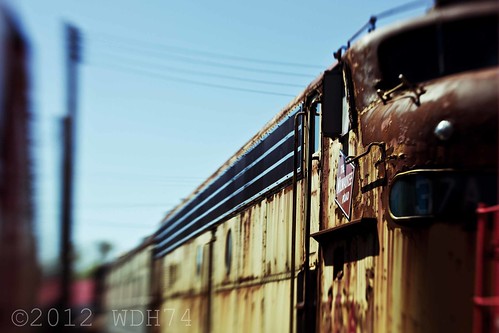
An old EMD E-9A, built in 1961. Electro-Motive's E series (and it's cousin, the F-series freight engine) is an icon of American railroading. Built between 1937 and 1963, these cab units (so named because of the car-like shape to their noses) were easy to use and maintain, and their ease of being run in tandem revolutionized railroading. They also proved to be long-lasting-E-series passenger units were still being used in commuter service into the early 1990's, and plenty of short lines continue to use them today, almost fifty years after production ceased.
This late example is a former Milwaukee Road unit, and is on display at the Illinois Railway Museum.
This late example is a former Milwaukee Road unit, and is on display at the Illinois Railway Museum.
Tuesday, October 18, 2011
Burlington
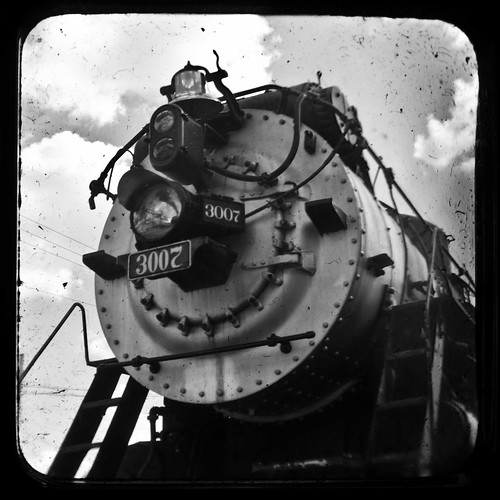
A classic Baldwin 4-6-4 steam locomotive, built by the Baldwin Locomotive Works in Philadelphia. Dating from 1930, this big boy served with the Chicago, Burlington, and Quincy.
I like this shot. It really has that analogue, TtV look to it, and encapsulates everything I like about this technique.
Wednesday, June 29, 2011
The Liberty Belle
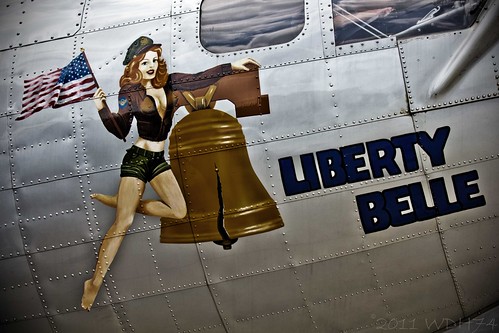
I recounted a bit about Boeing's B-17 a week or so ago, but felt it was worthwhile to show you another, clearer photo of the Liberty Belle's nose art. The practice of personalizing aircraft began during before World War One, particularly with German and Italian pilots. During the war German pilots were renowned for painting all manner of garish designs on their mounts, with scant regard to camouflage-after all, the Red Baron was a real pilot, and his personal planes were all pure scarlet. Other popular motifs were mouths painted around the propeller spinners, as well as the American tradition of squadron logos on the sides of planes.
But, nose art truly came into it's own during the second World War. Often considered the Golden Age of this particular art, both Axis and Allied pilots indulged, particularly American bomber crews. In fact, when one thinks of nose art one almost automatically imagines a big B-24 or something, with a cartoon character or Vargas girl splashed on the side. Good artists were in high demand within Air Corps squadrons, and were well paid by the crews for their services. Popular themes were cartoon characters, tributes to famous people, and the aforementioned Vargas-style pinups.
The Liberty Belle is a good example of the latter. Sadly, she's no more, having crashed soon after takeoff on June 13, 2011.
Tuesday, June 21, 2011
Through The Viewfinder Tuesday
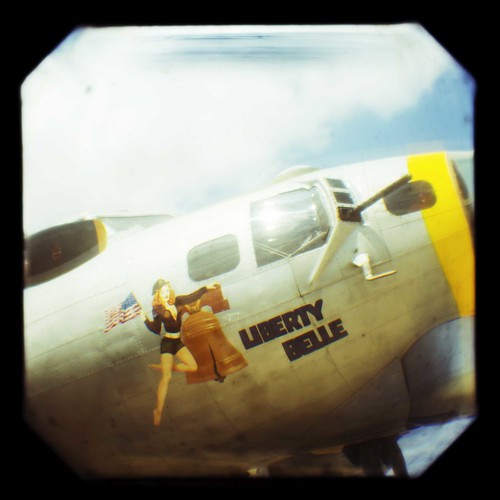
As I promised last week, a Boeing B-17 Flying Fortress. One of the most famous aircraft of the Second World War, the B-17 was the backbone of the USAAF's bomber forces in Europe. A tough, reliable airplane, the Fort quickly gained almost mythic status, after photographs of grievously damaged airplanes began to circulate, showing dramatically wounded examples that still managed to get their crews home safely. So right was the B-17's design, the final examples didn't leave service-with the Brazilian Air Force-until 1968, and civilianized examples continued to fly for a few years yet.
Sadly, this particular example no longer exists. Soon after takeoff on June 13, 2011, the Liberty Belle caught fire and made an emergency landing in a field near Aurora, Illinois. None of the passengers onboard was injured, but the Belle burned to the ground.
Thursday, May 26, 2011
Lincoln Highway
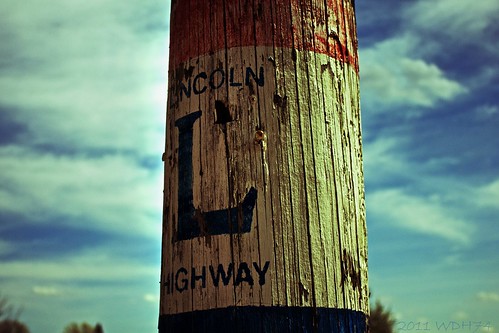
Revisiting the town of Franklin Grove, along the Lincoln Highway in Illinois. Frequently, back in the day, municipalities would paint the distinctive LH logo onto telephone poles through their towns, and back out into the countryside.
Today, many towns along the route hang banners from light poles to mark the historic road, but here in Franklin Grove, they still paint the logos right on the poles. There are several of them through town. This one's by a local elementary school.
Subscribe to:
Posts (Atom)